 USA
USA  Canada
  Brazil
  Germany
  France
  Italy
Italy  Switzerland
  Sweden
  Spain
Spain  Great Britain
 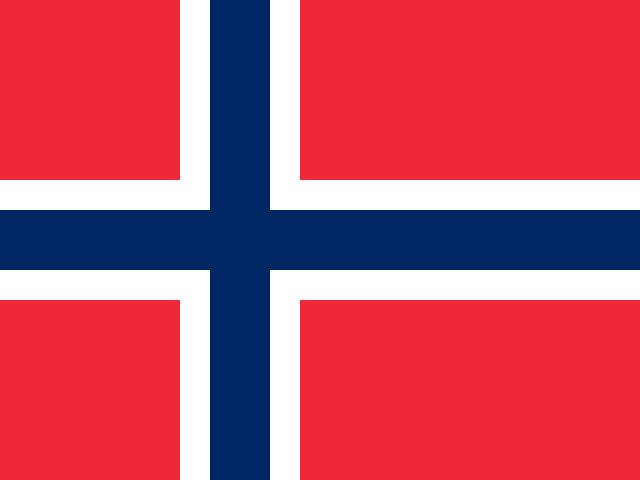 Norway
  Russia
 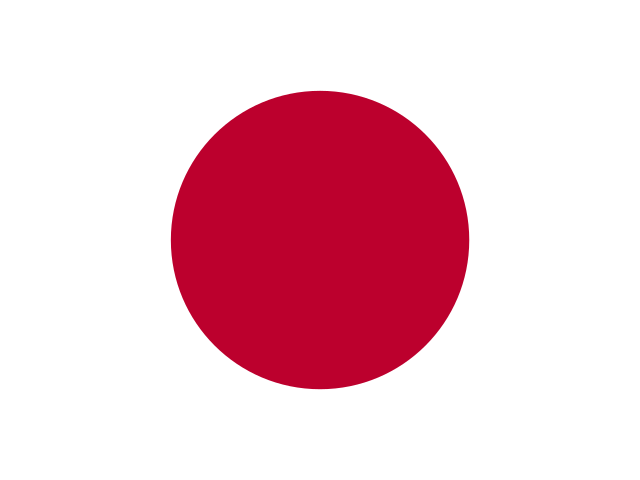 Japan
Japan 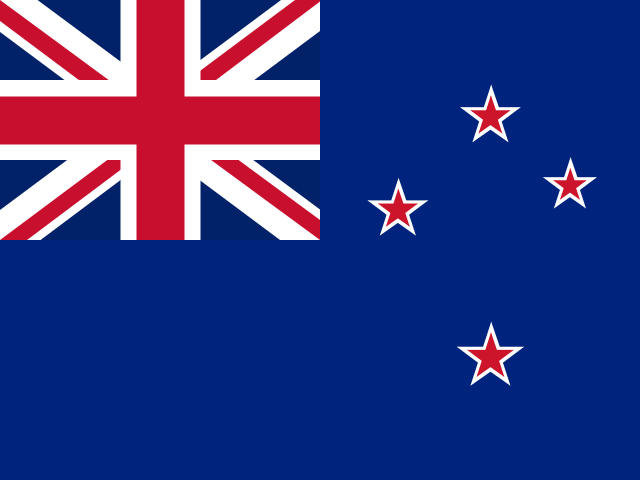 New Zealand
 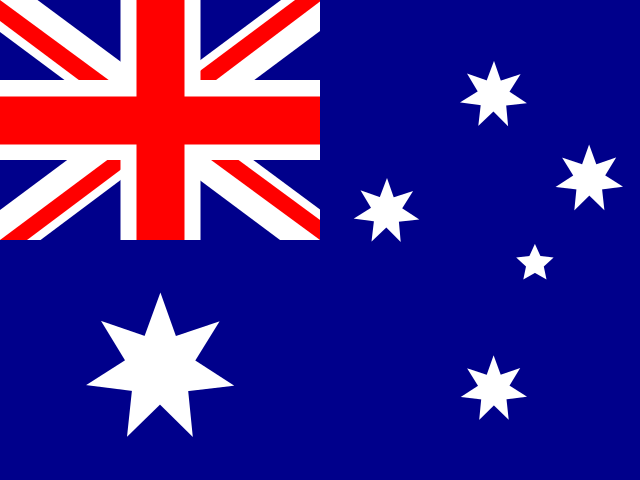 Australia
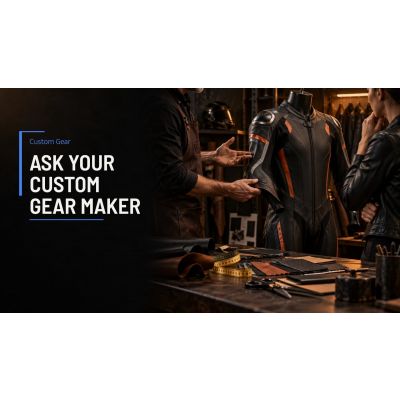
Custom motorcycle gear comes from three kinds of vendors: leather specialists that cut to a rider's own measurements, larger brands with a custom-order line, and local workshops that repair and alter. Which one suits a rider depends less on the name than on the answers to a short list of questions about measurements, materials, armour and communication. This guide sets out where to look and what to ask the maker before any order is placed.
Key Takeaways
- Three vendor types customise gear: made-to-measure specialists, brand custom lines and local workshops.
- Ask exactly what can change: sizing, panels, colours, lining, armour options and branding.
- Request documentation for any armour or standard a maker mentions instead of relying on a label.
- Get measurements, approvals and changes in writing before cutting begins.
Who Offers Custom Motorcycle Gear
The phrase "custom gear" covers very different services, so it helps to sort vendors by what they actually do.
Made-to-measure leather specialists
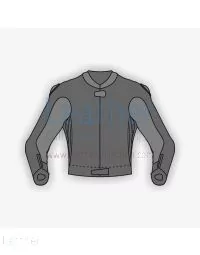
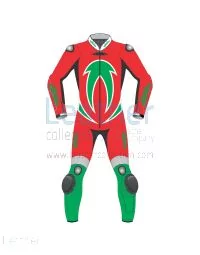
These makers build a garment from a pattern adjusted to the rider's body. Race suits, jackets and trousers are the usual products, and measurements are collected through a form; on the shop's product pages the form is submitted after the order is placed. A made-to-measure is a typical example of the category, and a shows how the same approach applies to a one-piece suit.
Brand custom lines
Some brands offer personalisation options; ask what is fixed in advance and what can change.
Local workshops and alteration shops
A nearby leather workshop can shorten sleeves, let out a waist, replace a zip or add a patch. Alteration is not the same as building from scratch, and structural changes to a suit with armour pockets or a stitched-in lining are not always possible. Ask what the shop has done on motorcycle garments before.
What Can Actually Be Customised
Before comparing vendors, decide which parts of the garment matter. The usual options fall into a few groups.
| Option | What to ask |
|---|---|
| Size and fit | Which measurements are taken, and can lengths be changed separately from the chest and waist? |
| Panels and colours | Can colours be set per panel, and is a colour sample or digital preview provided? |
| Leather type | Which hides are available, and how thick are they? |
| Lining and comfort | Is the lining removable, vented or perforated in selected areas? |
| Armour | Which armour is offered, and where are the pockets located? |
| Branding | Can names, numbers, logos or embroidery be added or left off? |
Not every maker offers every row. A vendor that is clear about what is fixed is often easier to work with than one promising unlimited changes.
Questions to Ask the Maker Before You Order
How are measurements taken and checked?
A reliable maker explains how to measure, supplies a form or guide and reviews the numbers received. Follow the maker's own measuring instructions (some require measuring on bare skin with a second person) and record the numbers in writing; send photos if the maker asks for them. A rider who also wants a suit that works in a tucked riding position should mention it, since a fit that looks right standing can feel different on the bike.
What happens if the fit is wrong?
Ask this in writing before paying, because made-to-measure gear cannot be treated like a stock item. The answer should say who pays for adjustments, whether alterations are possible and what the maker needs from the rider to diagnose the problem.
Which materials are used, and can the maker say so?
The maker should be able to state the leather type, the thickness range and what the lining and stitching are made from. Vague descriptions such as "genuine leather" say little about how the garment will behave. For a deeper look at reading these details, a spec sheet is only useful if each line can be checked against the product page or order form.
How is protection handled?
Standards describe test methods, not a promise about any one garment. EN 17092, the European standard for protective garments for motorcycle riders, has five classes, AAA, AA, A, B and C, where SATRA describes Class A as the lowest degree of protection and Class AAA as the highest; a class applies to the tested garment. Abrasion for EN 17092 is assessed on a Darmstadt machine, which SATRA describes as simulating a rider of average size sliding to a stop on a concrete road surface. A maker that mentions a class should be able to say which garment was tested and show the paperwork. If it cannot, treat the claim as unverified.
Armour is a separate question. Check the product page and order form for the armour option, ask which protector is fitted at each location and request the documentation for it. Never assume that armour listed for one garment applies to another.
Who approves the design before cutting?
Ask for a design confirmation step: a mockup, a written list of panel colours and a final check of the measurements. Once a hide is cut, changes are hard to make, so the confirmation is the rider's last opportunity to catch an error.
Red Flags When Comparing Vendors
- No explanation of how to measure, or no one to answer questions.
- Promises of full customisation with no list of what is included.
- Protection claims without a named standard, a class or documentation.
- No written description of the process, including who handles changes.
- Photos of finished work that are clearly stock images rather than examples of the maker's own garments.
It also helps to read reviews and rider forums for descriptions of the process, not just the finished product. Comments about communication, corrections and fit are more informative than general praise.
Choosing a Vendor by Garment Type
Different garments stress different parts of the process.
Race suits: Fit while tucked on the bike matters most, so look at makers that take torso and arm measurements separately. Browse the category to see the options a made-to-measure maker typically shows.
Jackets: Sleeve length and shoulder width are the common fit issues. A look through the shows the range of cuts available.
Trousers: Inseam, thigh and knee position decide comfort and armour placement; are usually easier to size once a jacket is working.
Gloves: Hand shape varies widely, so check what the maker needs, such as a hand outline, before ordering .
Preparing Your Order
Good preparation shortens the exchange with the maker. Write down the riding style, whether the gear will be used on the road or at track days, and the features that matter most. Take measurements twice, on different days, and compare them. Keep a short list of the questions above and save the maker's answers with the order confirmation.
A maker that welcomes the questions is a good sign. One that avoids specifics on materials, armour or fit adjustments is better treated with caution, however attractive the finished gear looks in photos.
Frequently Asked Questions
Which vendors allow you to customise motorcycle gear?
Custom work is offered by a range of makers: made-to-measure leather specialists, custom-order lines from larger brands, and small local workshops. What separates them is how much can change, from sizing and colours to panel layout and armour options. Compare each maker on the questions in this guide rather than on the word custom alone.
What is the difference between made-to-measure and made-to-order?
Made-to-order usually means a standard pattern is cut and sewn after the order is placed, often with choices of colour or finish. Made-to-measure means the pattern is adjusted to the rider's own measurements. Makers use the terms loosely, so ask which adjustments are actually included.
What measurements does a maker usually need for a custom suit or jacket?
Makers list the measurements they need. The shop's own form, for example, lists circumferences and lengths such as neck, chest, waist, hip, thigh, knee and inseam. Follow the maker's own instructions, record the numbers in writing, and recheck anything that looks odd before ordering.
Can custom gear include armour at a chosen protection level?
Often the armour is offered as an option on the product page or order form. Because a standard describes how a protector is tested, not how a garment performs for a given rider, ask the maker which armour is fitted and request the documentation for it before ordering.
Is a custom design always slower to arrive than ready-made gear?
Usually a custom order involves extra steps such as measurements, confirmation of details and cutting to the pattern, so it follows a different timeline from stock items. Ask the maker for a written timeline for your specific order rather than relying on a general estimate.
Written by the Leather Collection Editorial Team.