 USA
USA  Canada
  Brazil
  Germany
  France
  Italy
Italy  Switzerland
  Sweden
  Spain
Spain  Great Britain
  Norway
  Russia
  Japan
Japan  New Zealand
  Australia

A leather jacket works in every season when the layers underneath change and the jacket stays the same: a thin tee or shirt in warm weather, a knit or hoodie in the cool months, and a thicker mid layer plus scarf and gloves in the cold. The jacket acts as the outer shell, so the job of each season is to adjust what sits under it, how much room the cut allows, and what the weather does to the leather.
This guide walks through spring, summer, fall and winter for men, with layering combinations, fit checks and a few practical limits. Browsing gives a sense of how many cuts exist before choosing one.
Key Takeaways
- Treat the leather jacket as the outer shell and change the layers under it with the temperature.
- Fit decides how many layers are possible: check the shoulders and sleeves while wearing the thickest layer planned.
- Light cuts suit warm and mild days; roomier or lined cuts suit cold ones.
- Keep the leather clear of heavy rain and follow the care label for the jacket's finish.
The layering logic behind a leather jacket
Outdoor clothing guidance describes three roles. According to Wikipedia's overview of layered clothing, the inner layer draws sweat away from the skin, the middle layer adds insulation, and the outer layer protects the others from wind and water. A leather jacket sits in the outer role.
That framing explains most styling decisions. Under the jacket, the layer touching skin should be comfortable and not bulky. The middle layer decides warmth. Anything piled on top, such as a scarf, goes over the jacket rather than under the collar, where it creates bunching.
Check the fit before adding layers
A jacket cut close to the body looks sharp over a single tee but pulls across the back once a sweater goes under it. Before buying, put on the thickest layer planned for the coldest weeks, raise both arms and cross them in front. If the shoulders strain, size up or choose a cut with more room. Some leathers relax with wear, but the shoulder seam position should be right from the start.
Spring: light layers and an open front
Spring mornings are cool and afternoons mild, so layers must come off easily. A plain crew-neck tee, a henley or an oxford shirt under the jacket covers most days. A thin cotton or merino knit is enough on colder mornings.
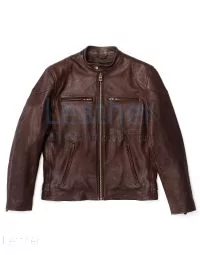
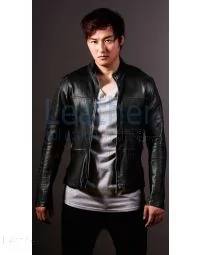
A slim, unlined cut keeps the silhouette clean. A , which its product page lists with a snap-down collar, pairs well with a tee and dark jeans, while a is another option to compare for layering over a tee; its product page lists a relaxed shirt-style fit. Wear the jacket open or half-zipped and carry nothing bulky in the pockets so the lines stay neat.
Summer: when a leather jacket still makes sense
Leather is not a hot-weather material, so summer wear is about timing. Early mornings, evening rides and air-conditioned venues are the realistic moments. Wear a single breathable layer, such as a cotton or linen shirt, and treat the jacket as something to put on and take off, not wear all day.
Lighter colours and thinner hides look less severe in warm light, and an unlined jacket carried over the shoulder is acceptable between stops. Pair it with chinos or lightweight trousers instead of heavy denim. Sweat can leave marks on a jacket's lining and collar, so a clean shirt layer helps, and the care label will say how the finish should be treated.
Fall: the easiest season for leather
Cool, dry air is when a leather jacket looks most at home. Layer a tee with a lightweight sweater, a flannel shirt or a zip hoodie. Keep the colours tonal: grey, navy, olive, cream and denim blue all sit well with brown or black leather.
Structured and textured cuts add interest without extra bulk. An suits a tee and sweater combination, and the jacket stays the focal point when the layers underneath stay plain. Boots and a belt in a matching tone tie the outfit together. The leather jacket story dates back a long way: Wikipedia's history of the leather jacket traces it from military flight jackets, such as the A-1 adopted by the U.S. military in 1927, to the 1953 film The Wild One, which Wikipedia credits with boosting the leather jacket's adoption among American youth.
Winter: building warmth under the shell
Cold weather needs a real mid layer. A thick knit, a fleece or a quilted vest under the jacket adds insulation, and a thermal base layer handles the coldest days. The fit rule from earlier applies directly: if the sleeves bind, the layers compress and lose some of their insulating air, so a cut with extra room helps.
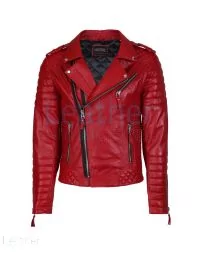
A has diamond quilting on the shoulders and waist according to its product page, which shows how quilting changes the look. The category is the place to browse more options. Whatever the choice, check the product page and the order form for lining options rather than assuming.
Accessories that do the extra work
A scarf worn over the jacket, leather or knit gloves and a beanie close the gaps that a jacket cannot. Avoid very thick scarves tucked under the collar, which push the jacket out of shape. Compare collar styles, lengths and linings before settling on one for the coldest months.
Rain, snow and keeping the jacket in shape
Leather and water do not always get along, and the effect depends on the finish and construction. How a jacket copes with rain depends on its finish and construction, so check the care label and ask the maker. The right cleaning or conditioning product also depends on the leather, so follow the garment's care label and the maker's instructions instead of a general rule.
For drying and storage, follow the garment's care label and the maker's instructions; the right method depends on the leather's finish and construction.
Season-by-season quick reference
| Season | Under the jacket | Cut to look for |
|---|---|---|
| Spring | Tee, henley, thin knit | Slim, unlined |
| Summer | Single breathable shirt | Lightweight, carried more than worn |
| Fall | Tee with sweater, flannel or hoodie | Structured or textured, standard fit |
| Winter | Thermal base, thick knit, fleece or quilted vest | Roomier cut, lined or quilted |
Frequently Asked Questions
Can you wear a hoodie under a leather jacket?
Yes, and it is a common cool-weather combination. Pick a thin or mid-weight hoodie, and let the hood lie flat or tuck it inside the collar. A bulky hood can push the jacket collar out of position, so try the combination on before relying on it for a full day.
How do you layer a leather jacket in cold weather?
Start with a thermal base layer, add a knit, fleece or quilted vest for insulation, and keep the jacket as the outer shell. Make sure the sleeves and shoulders still move comfortably, because tight layers lose insulating air. Add a scarf and gloves over the jacket instead of under it.
Which colours work well under a brown or black leather jacket?
Neutral tones such as white, grey, navy, olive and cream work with both finishes, and denim blue is an easy match. Plain colours let the leather stand out. Patterns work too, provided only one piece in the outfit carries a bold print.
Is it okay to wear a leather jacket in the rain?
It depends on the leather's finish and construction. Some leathers tolerate a light shower and others mark easily, so there is no single rule. Check the garment's care label and the maker's instructions, and ask the maker about drying a wet jacket.
Written by the Leather Collection Editorial Team.