A guide to reading motorcycle gear specifications. It explains the EN 17092 garment classes, the EN 1621 impact levels for limb and back protectors, why leather thickness alone is not enough, and how...
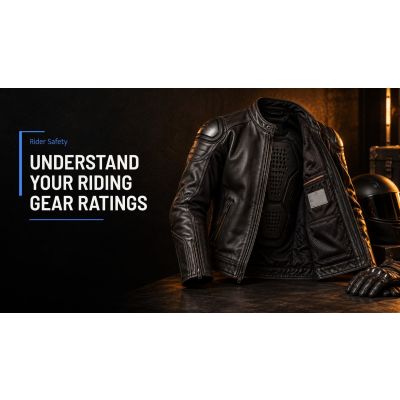
A guide to judging protective motorcycle leather gear: what EN 17092 classes AAA to C mean, how EN 1621 Level 1 and Level 2 armour differs, where armour must sit, how fit affects protection and what...
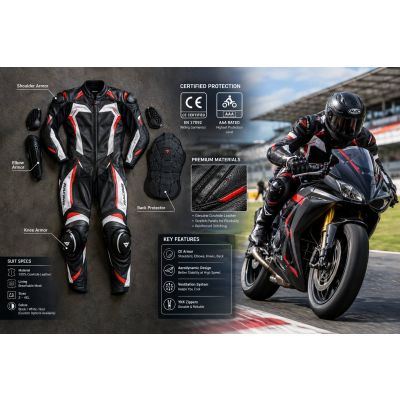
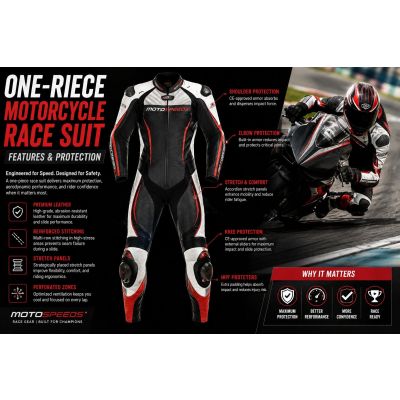
A one-piece motorcycle race suit keeps shell, seams and armour connected with no gap at the waist. This guide explains EN 17092 classes, EN 1621 armour levels, what a correct fit feels like...
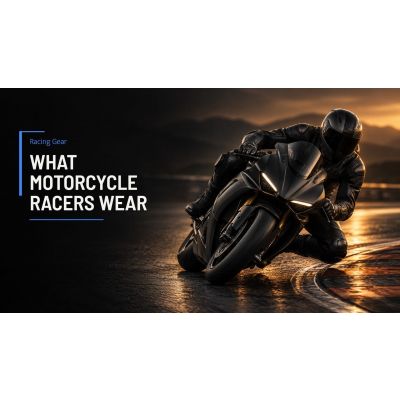
A guide to what MotoGP riders wear and why. It explains how racing leather suits are layered, which hides and armour they use, what knee sliders, the back hump and airbags do, how EN 17092 classes...
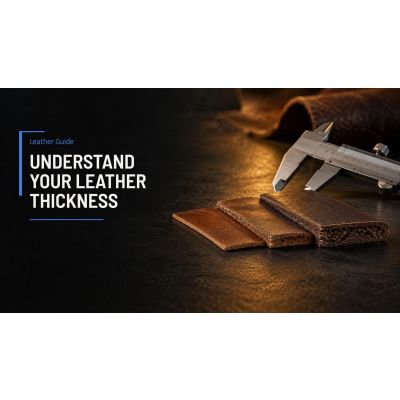
This guide compares 1.1 mm, 1.3 mm and 1.4 mm cowhide in motorcycle gear. It explains how thickness affects abrasion resistance, flexibility, weight and break-in, how EN 17092 treats the finished...
Leather and biker culture are closely linked. This guide covers how the tradition began with the Perfecto jacket and 1950s films, why riders use leather, how club colours and patches work, and how to...
Learn what CE marked motorcycle gear means. This guide explains the EN17092 classes A, AA and AAA, how abrasion, tear, seam and armour tests work, how leather and textile differ, and how to read the...
A guide to the Spiderman leather motorbike race gloves, a red and silver design inspired by Marvel's Spider-Man. It covers the cowhide shell, TPU sliders and flexible knuckles listed on the product...
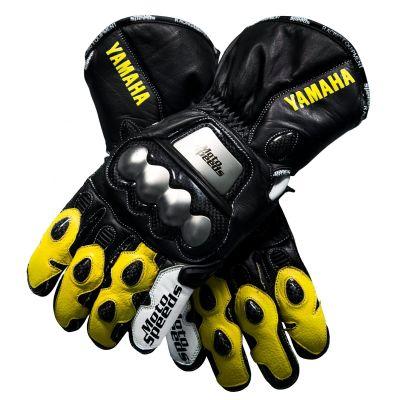
Yellow motorcycle gloves inspired by Yamaha racing gloves, made from 0.8 to 0.9 mm cowhide with a carbon-reinforced metal knuckle protector, TPU sliders, pre-curved fingers and Velcro closures. This...
This website uses cookies to improve your experience. By clicking “Deny”, you consent to the use of Necessary cookies only. You may also accept selected cookies only.
 USA
 Canada
 Brazil
 Germany
 France
 Italy
 Switzerland
 Sweden
 Spain
 Great Britain
 Norway
 Russia
 Japan
 New Zealand
 Australia